Injury Taping Richmond
Support injured muscles and joints, reduce strain, improve movement confidence, and safely return to work, exercise, and sport with personalised Injury Taping at MG Rehab in Richmond.
- ✓ MSc Qualified Rehabilitation Therapist
- ✓ Sports & Kinesiology Taping
- ✓ Personalised Injury Assessment
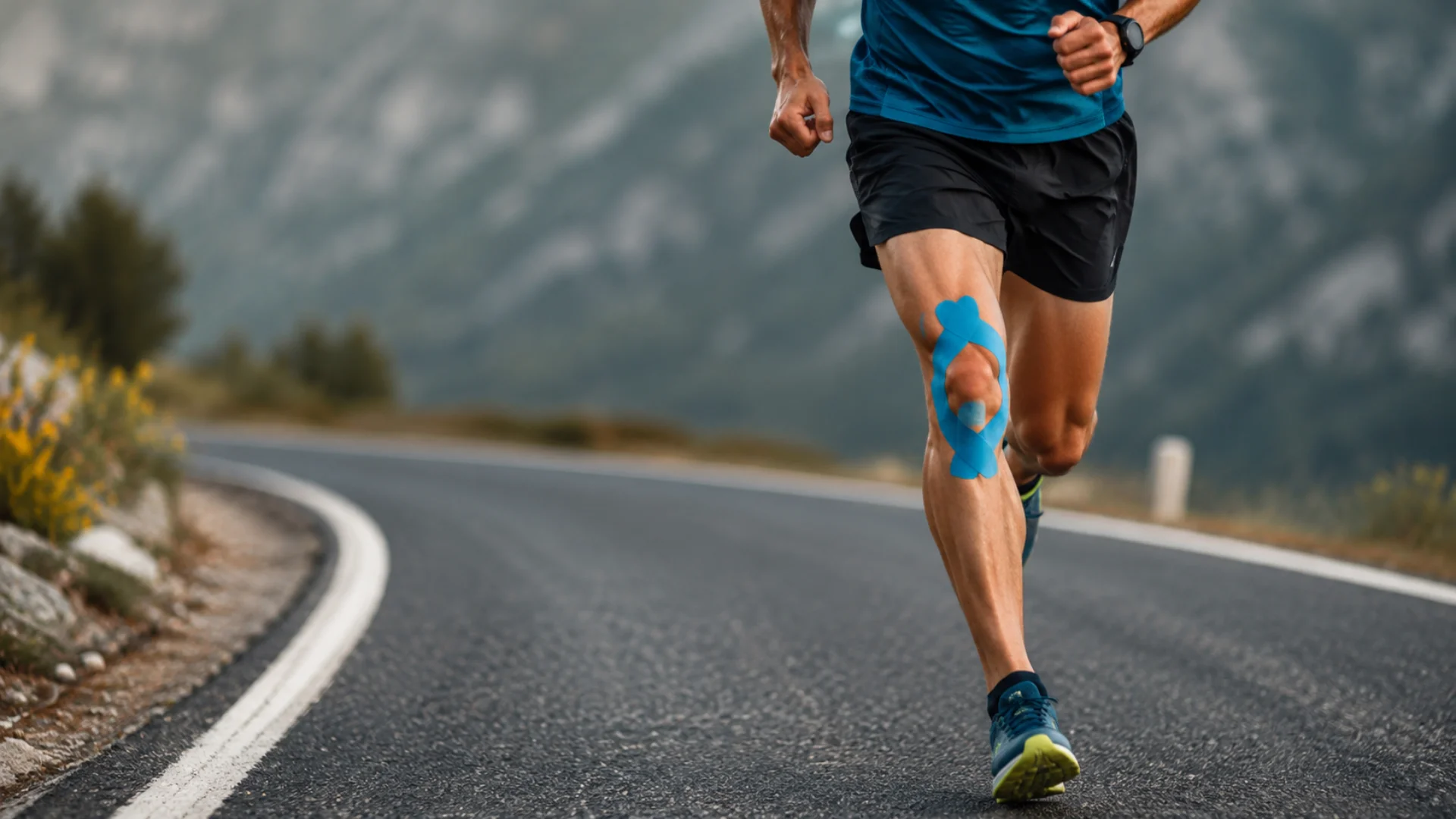
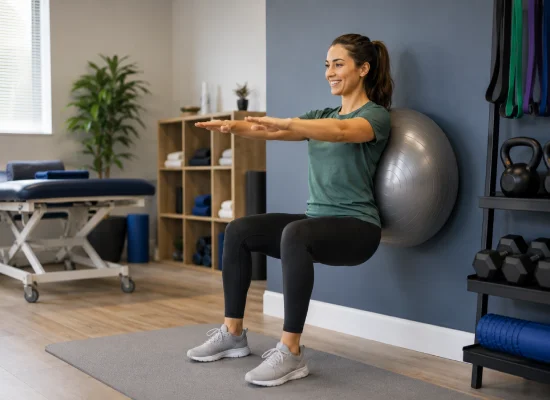
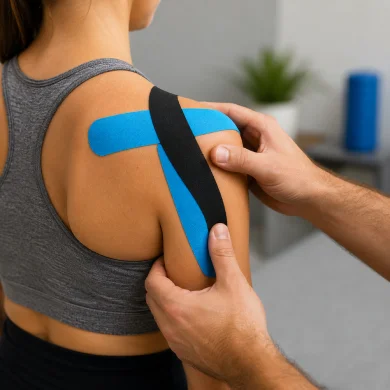
Professional Injury Taping In Richmond
Injury Taping is a personalised treatment used to support injured muscles, tendons, ligaments, and joints while helping reduce pain, improve movement, and protect healing tissues during everyday activities, exercise, and sport. Depending on your injury and rehabilitation goals, treatment may involve rigid sports taping to improve joint stability or kinesiology taping to support muscles and encourage more efficient movement without unnecessarily restricting mobility.
Every appointment begins with a detailed assessment to identify the underlying cause of your symptoms and determine whether Injury Taping is appropriate for your condition. Tape is then applied using evidence-informed techniques tailored to your injury, activity level, and recovery goals, helping improve movement confidence while supporting the natural healing process. Injury Taping is commonly used for ankle sprains, knee injuries, shoulder instability, muscle strains, tendon injuries, and many other musculoskeletal conditions.
For the best long-term results, Injury Taping is often combined with Exercise Therapy, Injury Rehabilitation, Joint Mobilisation
How Injury Taping Can Help
Whether you're recovering from a recent injury, returning to sport, or managing an ongoing musculoskeletal condition, Injury Taping provides additional support while allowing you to continue moving with greater confidence. Every application is tailored to your injury, symptoms, and activity level, helping reduce strain on injured tissues while supporting rehabilitation and long-term recovery.
Support Injured Joints
Provide additional support for injured or unstable joints during everyday activities, work, exercise, and sport while helping reduce unnecessary strain on healing tissues.
Reduce Stress On Injured Tissues
Appropriately applied tape helps reduce excessive stress on muscles, tendons, and ligaments, allowing injured tissues to recover while remaining active where appropriate.
Improve Movement Confidence
Many people feel more confident returning to walking, running, training, or sport when injured areas are supported with professionally applied sports or kinesiology tape.
Support Rehabilitation
Injury Taping works alongside rehabilitation exercises by supporting movement while strength, mobility, balance, and function are progressively restored.
Help Manage Pain During Activity
Supporting injured tissues and improving movement mechanics may help reduce discomfort during everyday activities, work, and physical exercise without replacing appropriate rehabilitation.
Assist Return To Sport
Whether you're returning to running, football, rugby, tennis, gym training, or another activity, Injury Taping can provide additional confidence and support during your progression back to full participation.
Common Injuries Supported By Injury Taping
Injury Taping can be used to support a wide range of musculoskeletal injuries affecting the muscles, tendons, ligaments, and joints. Following a detailed assessment, tape is applied where appropriate to improve support, reduce strain on injured tissues, and help you continue moving comfortably while progressing through rehabilitation.
- Ankle Sprains – support injured ankle ligaments, improve stability, and help restore confidence during walking, running, and sport while your injury recovers.
- Knee Injuries – provide additional support for knee injuries, including ligament sprains, patellofemoral pain, and tendon-related conditions, helping improve movement during rehabilitation.
- Shoulder Instability – support the shoulder during movement and sporting activities while reducing excessive strain on vulnerable structures.
- Tennis & Golfer's Elbow – reduce stress on the elbow during gripping, lifting, racquet sports, golf, and repetitive work activities while rehabilitation continues.
- Wrist & Thumb Injuries – support injured wrists and thumbs following sprains, overuse injuries, or sporting incidents without unnecessarily restricting function.
- Achilles Tendinopathy – reduce strain on the Achilles tendon during walking, running, and sporting activities while supporting progressive tendon rehabilitation.
- Plantar Fasciitis – support the arch of the foot and reduce stress through the plantar fascia to improve comfort during standing, walking, and running.
- Muscle Strains – support recovering calf, hamstring, quadriceps, and other muscular injuries while gradually returning to exercise and sport.
Why Injury Taping Works
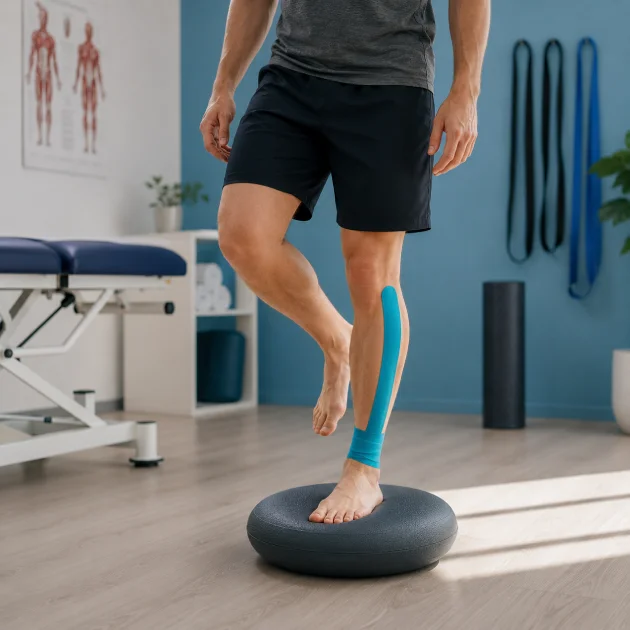
Injury Taping works by providing temporary support to injured muscles, tendons, ligaments, and joints while allowing your body to continue moving as naturally as possible. Depending on the injury, rigid sports tape may be used to improve joint stability and limit excessive movement, while kinesiology tape provides flexible support that allows normal movement while helping reduce strain on injured tissues.
Appropriately applied tape may also enhance proprioception—your body's awareness of joint position and movement—which can improve movement confidence and encourage better movement patterns during rehabilitation. By reducing unnecessary stress on healing tissues, Injury Taping can make everyday activities, work, exercise, and sport feel more comfortable while your rehabilitation progresses.
Although Injury Taping can provide valuable short-term support, it is not a standalone treatment or a cure for injury. At MG Rehab, taping is used as part of a comprehensive rehabilitation programme and is often combined with Exercise Therapy, Injury Rehabilitation, Joint Mobilisation, and other evidence-informed treatments to address the underlying cause of your symptoms and support long-term recovery.
Contact Us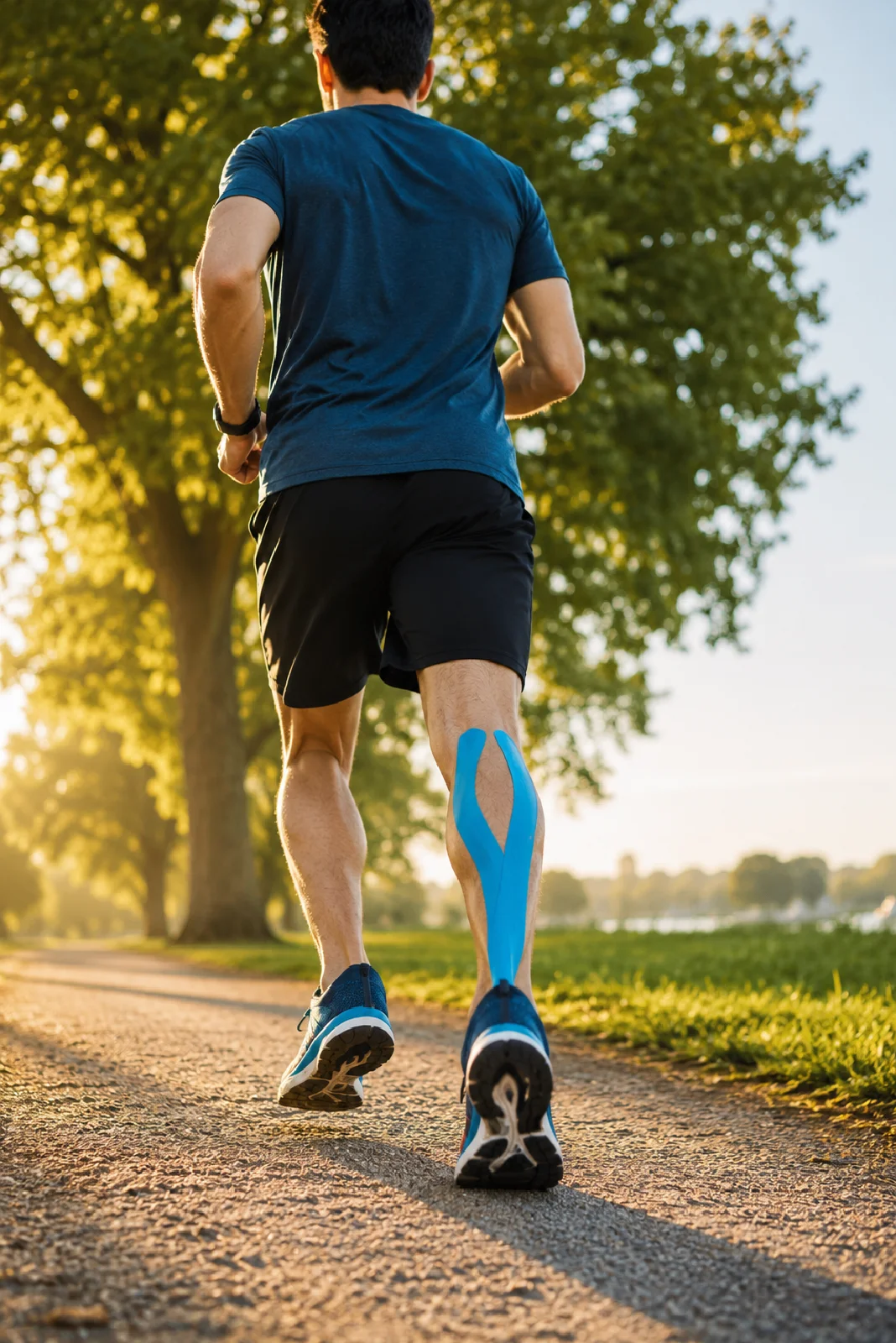
When Injury Taping May Be Appropriate
- 01
Ankle Sprains
Injury Taping is commonly used following ankle sprains to provide additional support for injured ligaments, improve stability, and help you return to walking, running, work, and sport with greater confidence while rehabilitation progresses.
- 02
Knee Injuries
Sports and kinesiology taping may be used to support common knee conditions, including ligament sprains, patellofemoral pain, and tendon-related injuries, helping reduce strain while improving movement during rehabilitation.
- 03
Shoulder & Upper Limb Injuries
Taping can help support the shoulder, elbow, wrist, and thumb following injury, improving movement confidence while reducing excessive stress on healing tissues during everyday activities and sport.
- 04
Muscle & Tendon Injuries
Kinesiology taping may be incorporated into rehabilitation for muscle strains, tendon injuries, Achilles tendinopathy, plantar fasciitis, and other overuse injuries, providing additional support while allowing natural movement.
Sports Taping vs Kinesiology Taping
Both Sports Taping and Kinesiology Taping are effective techniques used to support injured muscles, tendons, ligaments, and joints, but they serve different purposes. Following a detailed assessment, the most appropriate taping method will be selected based on your injury, symptoms, activity level, and rehabilitation goals. At MG Rehab, every taping application forms part of a personalised treatment plan designed to support recovery, improve movement, and help you return to everyday activities, exercise, and sport safely.
Sports Taping
Sports Taping, also known as rigid taping or athletic taping, uses a firm, non-elastic tape to provide additional support by limiting excessive movement around injured joints. It is commonly used following ankle sprains, ligament injuries, shoulder instability, and other acute injuries where increased stability is needed during rehabilitation or when returning to physical activity. Sports Taping helps protect vulnerable structures, reduce strain on healing tissues, and improve confidence during movement.
Kinesiology Taping
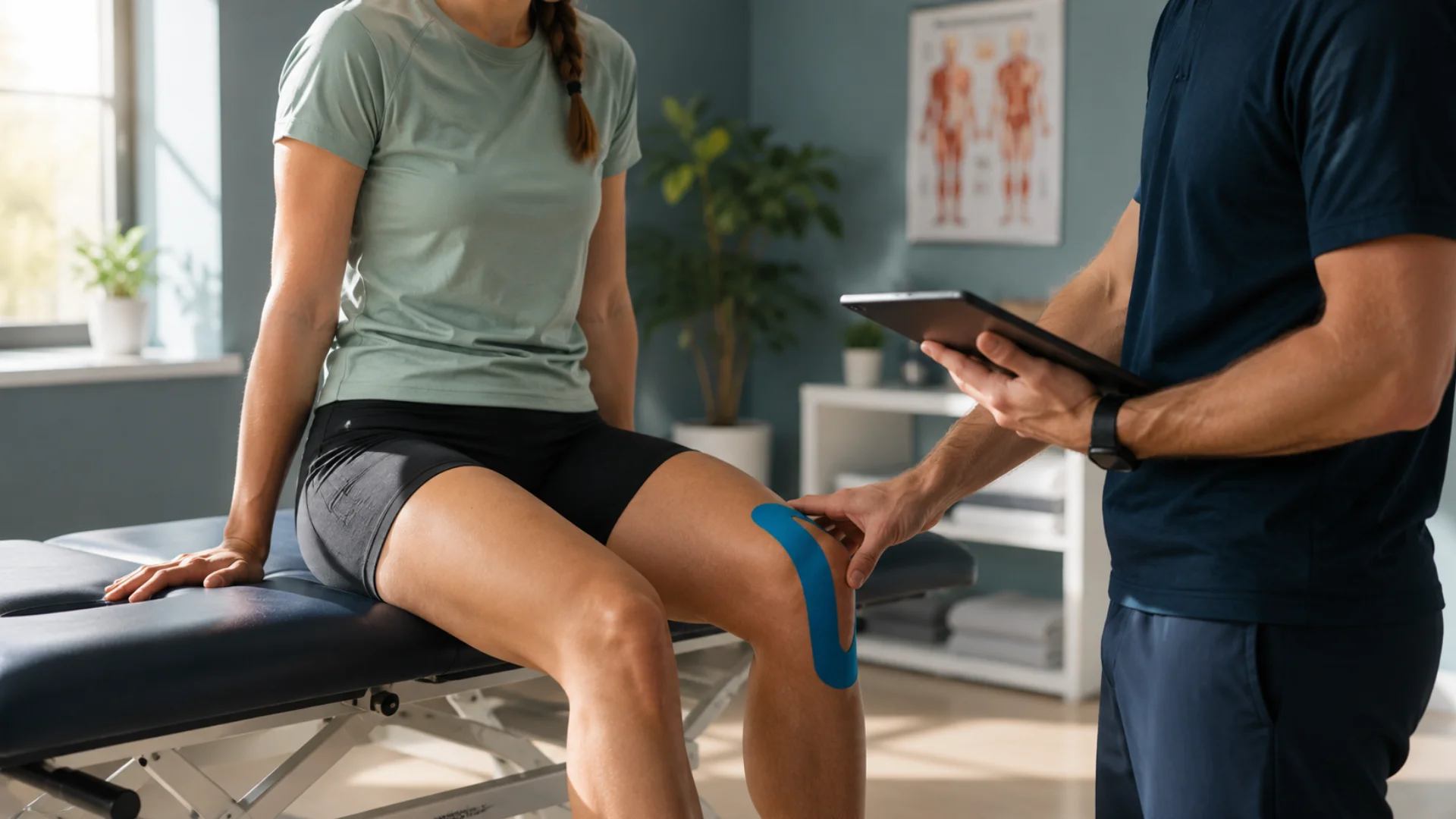
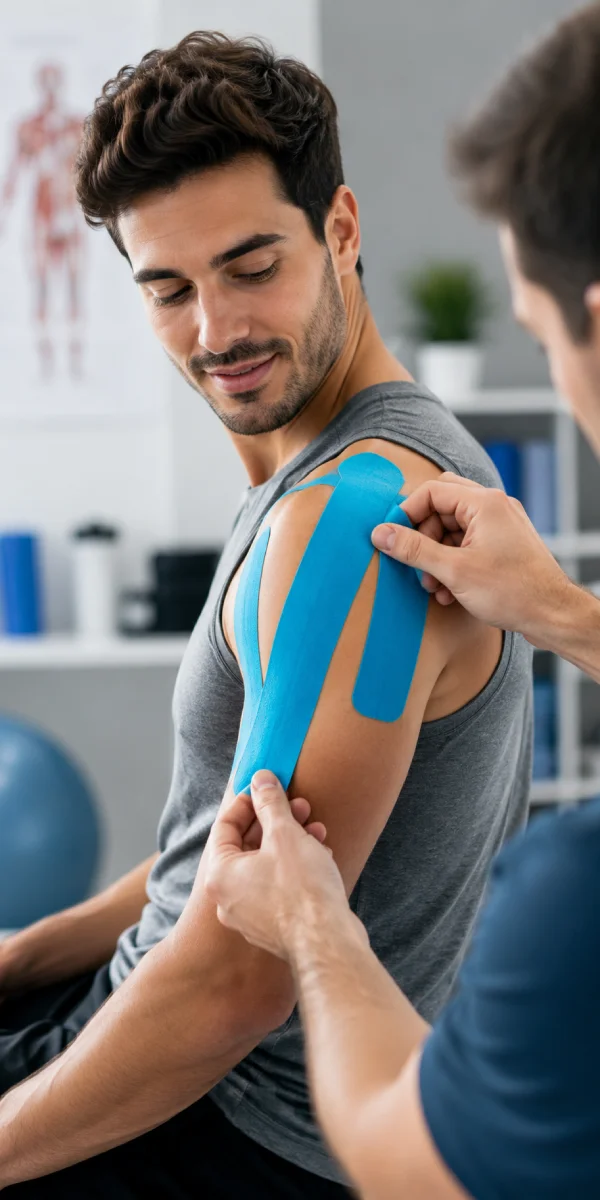
Kinesiology Taping uses a flexible, elastic tape that moves naturally with your body while providing gentle support to muscles and soft tissues. Unlike rigid tape, it allows a full range of movement and is often used during rehabilitation for muscle strains, tendon injuries, overuse injuries, and movement-related conditions. Kinesiology Taping may also help improve movement awareness, reduce muscular fatigue, and support more efficient movement patterns while you remain active.
There is no single taping technique that is suitable for every injury. Following your assessment, the most appropriate method will be selected based on your diagnosis, symptoms, lifestyle, and recovery goals. Where appropriate, Injury Taping may also be combined with Exercise Therapy, Injury Rehabilitation, Joint Mobilisation, Sports Massage, Deep Tissue Massage, or Acupuncture to address the underlying cause of your symptoms and support long-term recovery.
Common Conditions Injury Taping Can Help
Injury Taping is commonly used to support a wide range of musculoskeletal injuries affecting the muscles, tendons, ligaments, and joints. Following a detailed assessment, taping may be used to provide additional support, reduce unnecessary strain on injured tissues, improve movement confidence, and complement your rehabilitation programme. Depending on your diagnosis, Injury Taping may also be combined with Exercise Therapy, Injury Rehabilitation, and other evidence-informed treatments to support long-term recovery.
Sports Injuries
Support recovery from ligament sprains, muscle strains, tendon injuries, and other sports-related injuries by providing temporary stability while helping you safely return to training and competition.
Running Injuries
Provide additional support for common running injuries, including Achilles tendinopathy, runner's knee, shin splints, and plantar fasciitis, helping reduce strain while progressing through rehabilitation.
Joint Pain & Stiffness
Support painful or unstable joints by improving movement confidence and reducing excessive stress during everyday activities, work, exercise, and sport while underlying problems are addressed through rehabilitation.
Muscle Tightness & Tension
Kinesiology Taping may help support muscles affected by overuse, fatigue, or increased training loads, working alongside manual therapy and rehabilitation exercises to improve movement and reduce discomfort.
What To Expect During Your Injury Taping Appointment
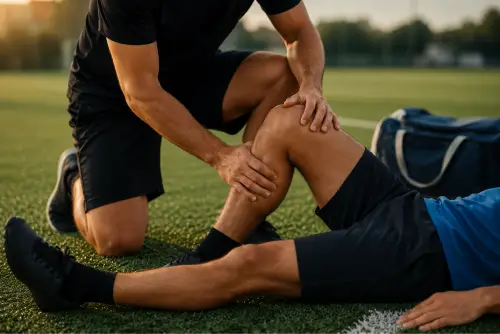
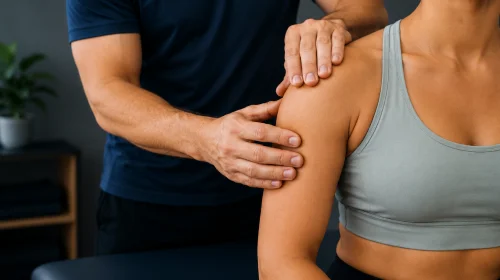
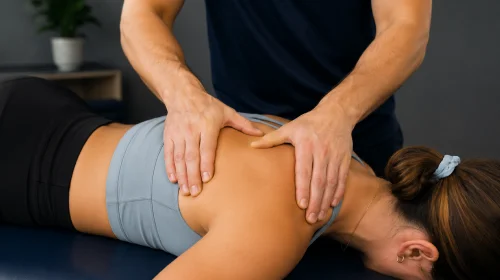
Every Injury Taping appointment at MG Rehab begins with a detailed assessment to determine the underlying cause of your symptoms and whether taping is appropriate for your injury. Rather than simply applying tape, treatment is tailored to your diagnosis, activity level, and rehabilitation goals, ensuring Injury Taping supports your recovery while helping you move with greater confidence.
Assessment
Every appointment begins with a detailed consultation discussing your symptoms, medical history, lifestyle, sporting activities, and recovery goals. This allows your injury to be accurately assessed and determines whether Injury Taping is the most appropriate treatment for your condition.
Movement Assessment
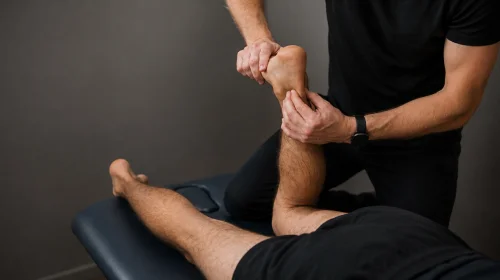
A physical assessment is carried out to examine joint mobility, muscle strength, movement patterns, and the structures contributing to your symptoms. Identifying the underlying cause of your injury helps ensure taping is applied effectively as part of a personalised rehabilitation programme.
Tape Selection
Following your assessment, the most appropriate taping technique is selected based on your injury and rehabilitation goals. Depending on your needs, this may involve rigid sports taping to improve joint stability or kinesiology taping to support muscles and encourage more efficient movement while remaining active.
Tape Application
Tape is applied using evidence-informed techniques tailored to your individual injury, helping provide temporary support, reduce unnecessary strain on injured tissues, and improve confidence during everyday activities, work, exercise, or sport. Every application is designed to complement your rehabilitation rather than replace it.
Movement Reassessment
Once the tape has been applied, your movement is reassessed to evaluate its effect on comfort, stability, and movement quality. Adjustments are made where necessary to ensure the tape provides the most appropriate level of support while allowing natural movement.
Rehabilitation Advice
Where appropriate, you'll receive personalised advice and rehabilitation exercises to support your recovery between appointments. Injury Taping is often combined with Exercise Therapy, Injury Rehabilitation, and other treatments to address the underlying cause of your injury and support long-term recovery.
Injury Taping As Part Of Your Recovery
Injury Taping is often most effective when used as part of a wider rehabilitation programme rather than as a standalone treatment. Depending on your assessment, diagnosis, and recovery goals, taping may be combined with other evidence-informed treatments to reduce pain, restore movement, improve physical function, and support long-term recovery. Every treatment plan is tailored to your individual injury, symptoms, lifestyle, and activity level.
Exercise Therapy forms the foundation of many rehabilitation programmes, helping restore strength, mobility, balance, and movement quality. Injury Taping provides temporary support while progressive exercises address the underlying cause of your symptoms and help reduce the risk of future injury.
Learn MoreAcupuncture may be incorporated into your treatment programme to help reduce pain, relieve muscle tension, and support recovery from musculoskeletal injuries. Where clinically appropriate, combining Acupuncture with Injury Taping may help improve comfort and facilitate rehabilitation.
Learn MoreDeep Tissue Massage may be used to relieve muscular tension, improve tissue flexibility, and reduce discomfort associated with injury or overuse. Combined with Injury Taping, it can help prepare the body for rehabilitation exercises and support ongoing recovery.
Learn MoreFor more complex or persistent injuries, Injury Rehabilitation combines personalised exercise, manual therapy, and Injury Taping to restore strength, improve movement, and help you safely return to work, exercise, and sport while reducing the likelihood of recurring injuries.
Learn MoreJoint Mobilisation may be incorporated where restricted joint movement is contributing to pain or altered movement patterns. Improving joint mobility alongside Injury Taping can help restore more efficient movement and improve overall function during rehabilitation.
Learn MoreSports Massage helps reduce muscular tension, improve recovery following physical activity, and prepare the body for movement. When appropriate, Sports Massage may be combined with Injury Taping to reduce muscular overload, improve movement quality, and support a safe return to exercise and sport.
Learn More
Why Choose MG Rehab For Injury Taping?
Choosing the right therapist is just as important as choosing the right treatment. At MG Rehab, Injury Taping is never applied as a quick fix or standalone solution. Every appointment begins with a detailed assessment to identify the underlying cause of your symptoms before selecting the most appropriate taping technique and rehabilitation approach. The goal is not only to support your injury today, but to help restore movement, improve physical function, and reduce the risk of future problems.
MSc Qualified Rehabilitation Therapist
Receive treatment from an MSc-qualified Sport & Exercise Rehabilitation Therapist with extensive experience assessing and treating a wide range of musculoskeletal injuries. Every taping application is based on clinical assessment, ensuring treatment is tailored to your injury, activity level, and recovery goals rather than following a standard taping technique.
Evidence-Based Assessment & Taping
Both Sports Taping and Kinesiology Taping are selected using evidence-informed clinical reasoning. Following a detailed assessment, the most appropriate taping method is chosen to support your injury, improve movement, and complement your rehabilitation programme while addressing the underlying cause of your symptoms.
Personalised One-to-One Treatment
No two injuries are the same, which is why every treatment plan is tailored specifically to you. Whether you're recovering from a sports injury, managing a tendon problem, or returning to physical activity, your Injury Taping is integrated into a personalised rehabilitation programme designed around your individual needs and long-term goals.
Elite Sporting Experience
Experience working with professional athletes provides valuable insight into injury management, return-to-sport planning, and the physical demands of training and competition. The same evidence-informed approach is applied whether you're an elite athlete, recreational runner, gym user, manual worker, or simply looking to move more comfortably.
Focused On Long-Term Recovery
While Injury Taping can provide valuable short-term support, lasting results come from addressing the underlying cause of your symptoms. Where appropriate, treatment is combined with Exercise Therapy, Injury Rehabilitation, Joint Mobilisation, and other evidence-informed treatments to restore strength, improve movement quality, and help reduce the likelihood of recurring injuries.
Injury Taping FAQs
If you're considering Injury Taping, it's natural to have questions about how it works, when it's appropriate, and what to expect during treatment. Below are answers to some of the most common questions about Injury Taping at MG Rehab.
Injury Taping is a treatment used to support injured muscles, tendons, ligaments, and joints while allowing you to continue moving safely. Depending on your injury, treatment may involve rigid Sports Taping to improve joint stability or Kinesiology Taping to support muscles and encourage more efficient movement.
Sports Taping uses a rigid, non-elastic tape to provide additional stability by limiting excessive joint movement. Kinesiology Taping uses an elastic tape that moves naturally with the body while providing gentle support to muscles and soft tissues. The most appropriate technique is selected following your assessment.
Injury Taping helps support injured tissues, reduce unnecessary strain, improve movement confidence, and complement your rehabilitation programme while your body recovers. It is designed to support movement rather than replace rehabilitation.
Yes. Injury Taping is commonly used to support recovery from ankle sprains, knee injuries, muscle strains, tendon injuries, shoulder instability, and many other sports-related injuries. Every treatment is tailored to your diagnosis and rehabilitation goals.
In many cases, yes. Injury Taping is often applied to support movement during work, exercise, and sport. However, whether you should continue exercising depends on your injury and stage of recovery, which will be discussed during your assessment.
Rigid Sports Tape is generally worn during activity and removed afterwards. Kinesiology Tape can often remain in place for several days, depending on your skin, activity level, and how well the tape adheres. You'll receive advice specific to your application.
Yes. Kinesiology Tape is water resistant and can usually remain in place while showering. After getting it wet, gently pat the tape dry rather than rubbing it to help maintain adhesion.
No. Applying the tape itself should not be painful. If tape causes discomfort, skin irritation, or restricts movement more than expected, it should be reviewed and adjusted.
While Injury Taping may provide additional support during certain activities, it should not be relied upon as the primary method of injury prevention. Improving strength, mobility, movement quality, and load management remains the most effective long-term approach.
Yes. Injury Taping is often combined with Exercise Therapy, Injury Rehabilitation, Joint Mobilisation, Sports Massage, Deep Tissue Massage, and Acupuncture to help reduce pain, improve movement, and support long-term recovery.
No. In most cases, you can book directly without a GP or specialist referral. Every appointment begins with a detailed assessment to determine whether Injury Taping is appropriate for your condition and rehabilitation goals.
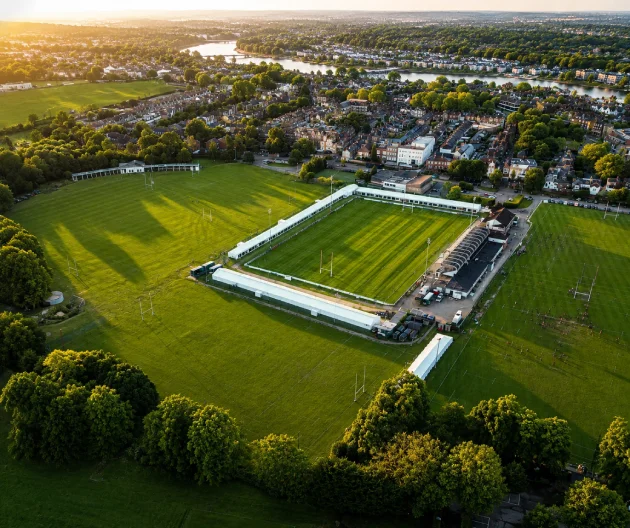
Injury Taping In Richmond & Surrounding Areas
MG Rehab is based at Old Deer Park Sports Ground in Richmond and regularly welcomes clients from Twickenham, Kew, East Sheen, Barnes, Mortlake, Teddington, and the surrounding areas.
Whether you're recovering from a sports injury, managing a ligament or tendon injury, or returning to exercise after injury, personalised Injury Taping can provide temporary support, improve movement confidence, and complement your rehabilitation programme while you recover.
Depending on your individual needs, treatment may also include Exercise Therapy, Injury Rehabilitation, Joint Mobilisation, Sports Massage, Deep Tissue Massage, or Acupuncture to support long-term recovery. Conveniently located in Richmond with excellent transport links and nearby parking, MG Rehab provides one-to-one treatment focused on helping you move confidently, recover effectively, and return to the activities you enjoy.
Book AppointmentTrusted by Clients Across Richmond
MG Rehab is highly rated by clients seeking sports massage, injury rehabilitation, acupuncture and pain relief in Richmond and the surrounding areas.


Rated 5.0 out of 5 based on 44 Google reviews
M
Can’t recommend Michael enough. Have seen him on a number of occasions for long standing issues, most of which are as a consequence of playing football for 24 years. Michael took the time to listen to me to understand the areas of concern and then proceeded to treat the troublesome areas. While the session may have ended I left with a treatment plan to action, resulting in greater mobility and less pain. Would recommend Michael to anyone!
Mitchell PotterC
Michael knows his stuff inside out. He’s helped me improve hamstring and lower back pain in just a few sessions. I’d highly recommend him to anyone looking to recover from injury or just stay fit and active. I’ve been to many physios in my time and Michael is amongst the best. If you’re considering physio with Michael, just book in now - you won’t regret it.
Catherine Seaborn
Ready To Support Your Recovery?
Whether you're recovering from a sports injury, managing a muscle or joint problem, or returning to exercise after injury, personalised Injury Taping can provide additional support, improve movement confidence, and complement your rehabilitation.
Book Appointment